Three spreadsheets, two fatwas and years of waiting. Then Imran Virk built Amanah Budget
Imran Virk spent more than 20 years designing systems for other companies in Michigan. Then he sat down to work out his own zakat, and built Amanah Budget, a budgeting app for Muslim families in the US.

A man sits down to work out his zakat. By the end he has three spreadsheets and two bookmarked fatwas, and he still isn’t sure his investments are halal. This is Imran Virk, in Ypsilanti, Michigan, a couple of years ago. He has spent more than 20 years designing large systems for other companies.
It strikes him that he has been solving everyone’s problems but his own.
He assumes a bigger company will build the fix one day, something made for Muslims. So he waits.
He waits for years.
When he finally stops waiting, he builds it alone, with no marketing budget, for families who would have to trust an app with their zakat. Building the app was the part he knew how to do. A financial product for a faith community, he says, needs more than good code.
This is how Amanah Budget got built: an old Excel sheet at home, conversations with families who were all improvising the same way, a search for scholars, banks that wouldn’t connect even when the app was ready, and one user who told him, in person, what the app had shown them.
At a glance
- Business
- Amanah Budget
- A budgeting app for Muslim families
- Based in
- Ypsilanti, Michigan
- Metro Detroit, USA
- Before this
- 20+ years
- As a developer and solutions architect
- Available on
- iPhone and Android
- Built and launched by one founder
01 · Before
Everyone’s problems but his own
Imran started as a software developer and became an enterprise solutions architect. For more than 20 years he designed and built large systems for e-commerce brands, multinational manufacturers and mid-sized to large US companies. His days went on integrations and platform architecture: turning what a business needed into systems that hold up at scale.
At home, he and his wife handled the Islamic side of their money by hand, with an Excel sheet he pulled up a few times a year. It was always out of date.
Zakat meant working out the nisab, tracking the hawl, and valuing what they had across accounts. Checking whether investments met Shariah standards, like those set by AAOIFI, was harder still. The budgeting apps he could download ignored all of it.
I figured if I was struggling with this after 20 years in tech, a lot of us were.
Last year, he stopped waiting for someone else to solve it.
02 · First steps
Notes in a notebook
He started by designing the app for himself. But he didn’t want to build it only around his own household, so he talked to other Muslim families about how they handled zakat, sadaqah, interest and Ramadan.
The answers were remarkably alike, he says. Some families did rough sums in their heads. Some kept handwritten notes in a notebook. Others had a simple spreadsheet that many didn’t keep up.
Then the numbers.
About 70% ended up estimating their zakat near the end of Ramadan. Roughly two out of three didn’t plan ahead for Ramadan and Eid. And all but one let interest sit in their accounts until Ramadan, then added it up and gave it to charity.


Everyone cared about getting it right, he says. The hard part was having a system they could trust all year. Those conversations became the blueprint.
So I built what I wanted for myself: one app that does the zakat math, screens your portfolio, flags interest, and keeps your budget on track.
He could build the app. How it should calculate zakat was a different question.
03 · Guidance
Where his expertise ended
The technical side came naturally to Imran, but he doesn’t claim to be a scholar of Islamic finance, and he didn’t want to make generic decisions on behalf of other Muslims without scholarly input. Before launch he went back to mentors from his technical career, and for the zakat calculations he went looking for scholars.
He spoke with several. He settled on Azka Advisors, where he works with Dr. Farrukh Habib, as the long-term partner for Shariah guidance. Amanah Budget publishes how that works in its Shariah compliance methodology.
I could build the app, but how zakat should be calculated isn’t mine to decide, so qualified scholars set the guidelines it follows.
The scholars would set the rules. Every other job in the company was still his.
04 · The hard part
Engineer, designer, support desk and marketer
He has been the engineer, the designer, the compliance lead, the support desk and the marketer, all at once, on a financial product where he says none of those could be done halfway.
Some problems code couldn’t solve. Some banks require a separate registration before they will connect. A family could be ready to link their account, with the app ready for them, and still be stuck.
The deepest problem was trust. A family has to trust an app before they hand it their zakat, and with no marketing budget there was no shortcut.
Trust is the product, and it comes slowly, one conversation at a time.
He says he’s still working through it, and three decisions have helped. The first was to stop doing it all alone: scholarly guidance gave families a reason to trust the app beyond his word. The second was a LaunchGood campaign, asking the community directly to fund outreach. The third was to stop pitching. He wrote about how families actually handle zakat, interest and Ramadan, and went to talk with them in person. At A2 Tech Trek in Ann Arbor, the questions at the Amanah Budget table were whether it tracks zakat automatically, whether it flags interest, and how it screens investments.
For the workload, he built tools that automate the repetitive parts. His own hours go to the product, the strategy and the community.
Then one user told him, in person, what the app had done for them.
Inside Amanah Budget
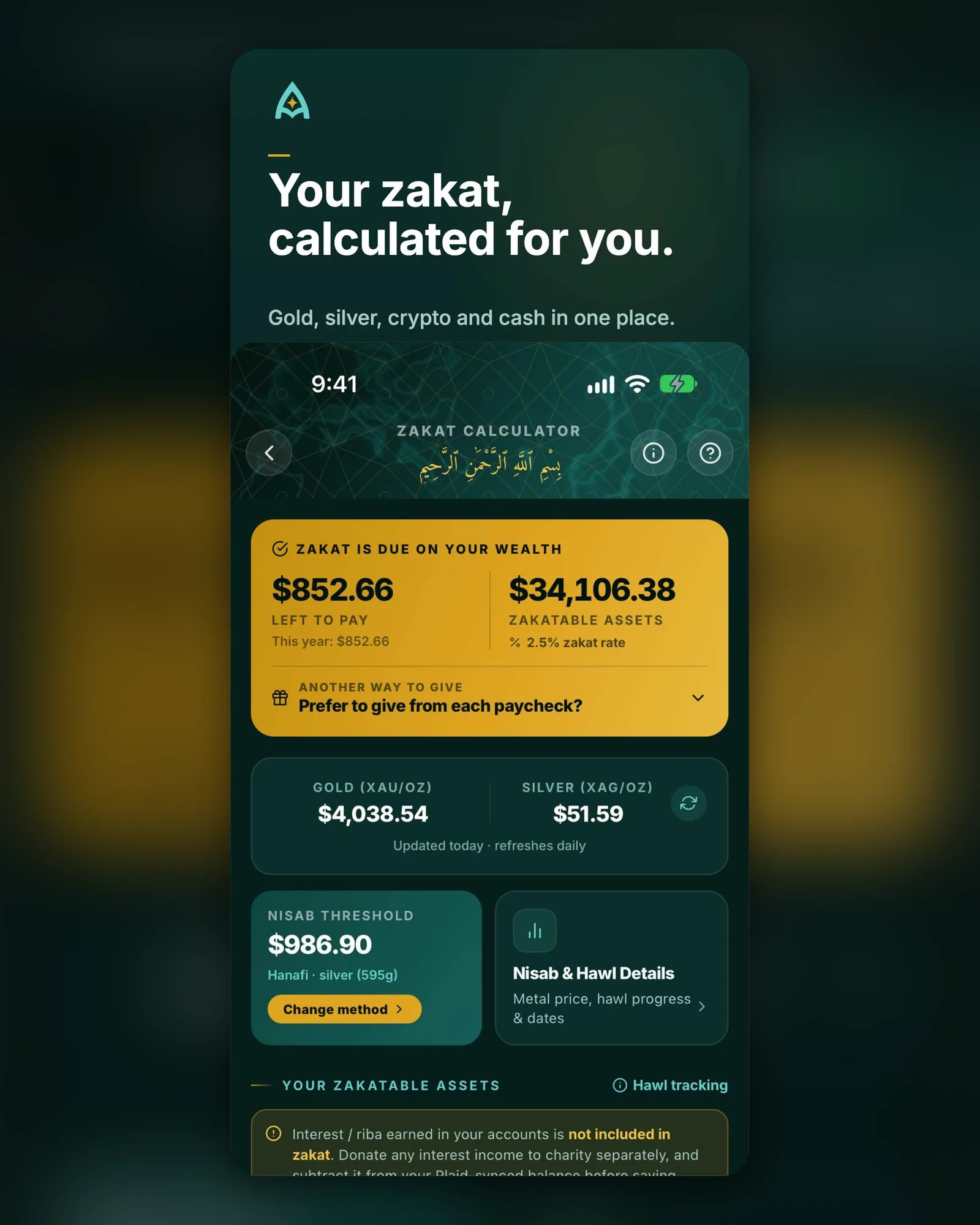
The zakat calculator: gold, silver, crypto and cash in one place, checked against the nisab. 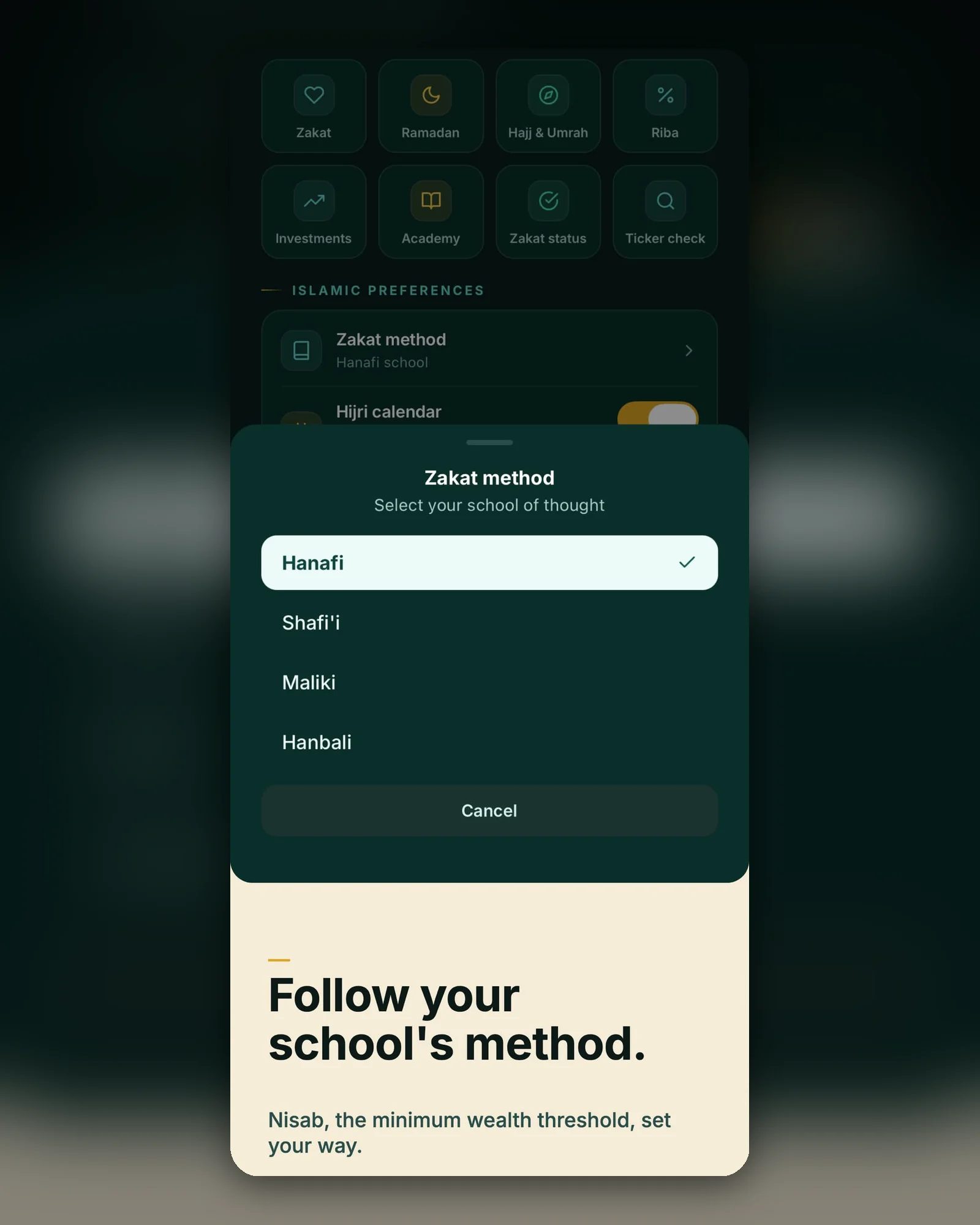
Zakat follows your school of thought: Hanafi, Shafi’i, Maliki or Hanbali. 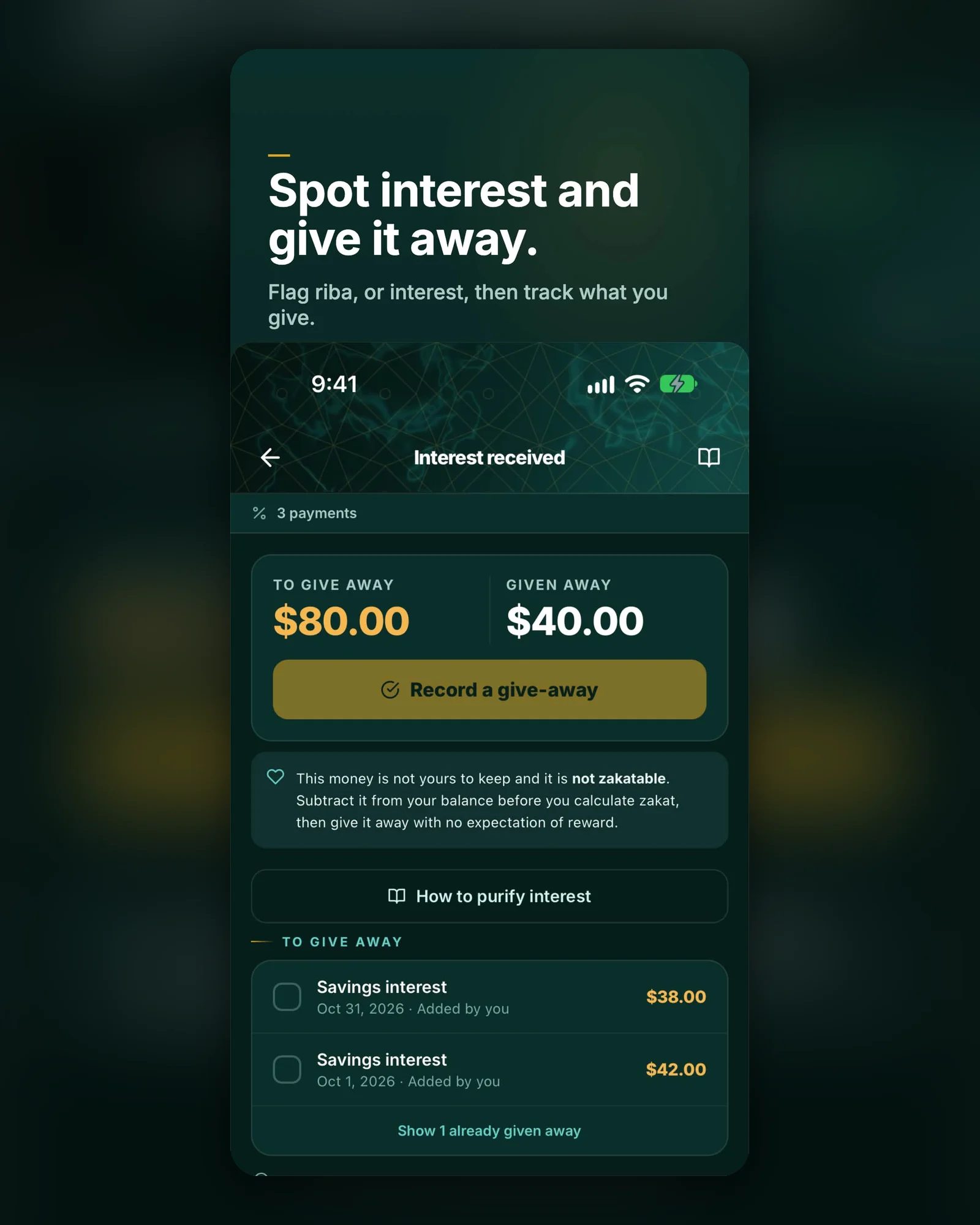
Interest is flagged as it lands, then tracked until you give it away. 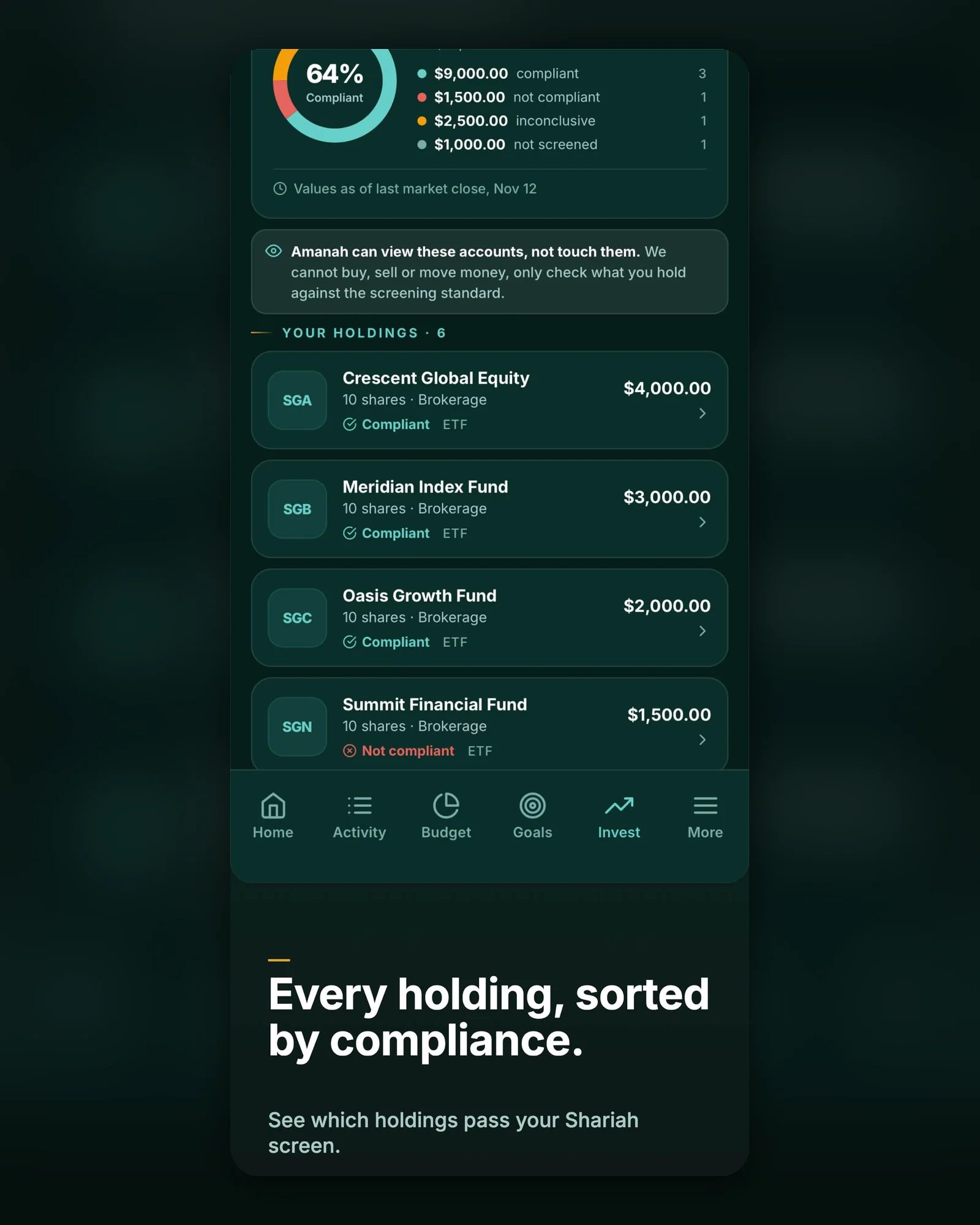
Every investment holding sorted by whether it passes a Shariah screen. 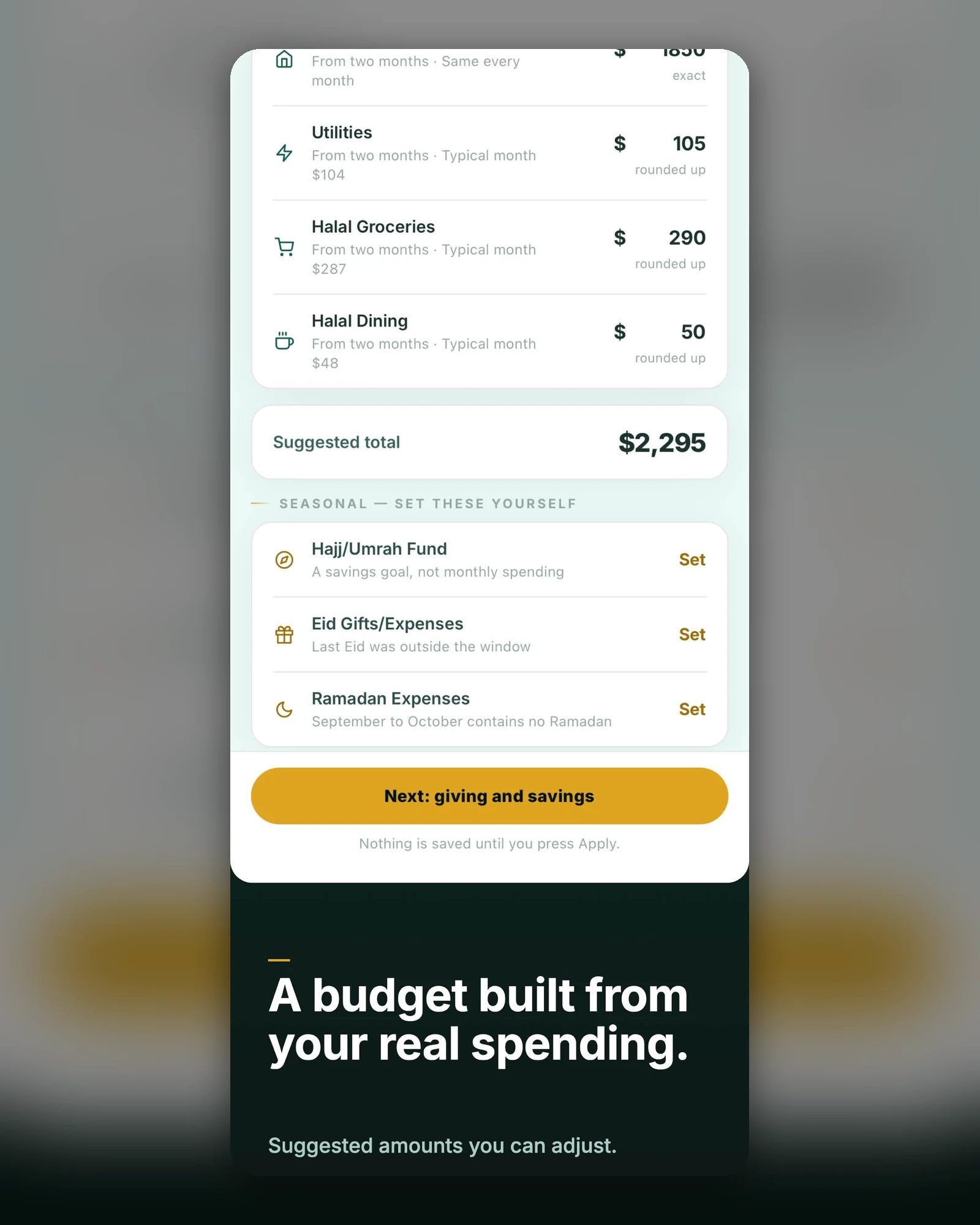
A budget built from what you really spend, with funds set aside for Hajj, Eid gifts and Ramadan. 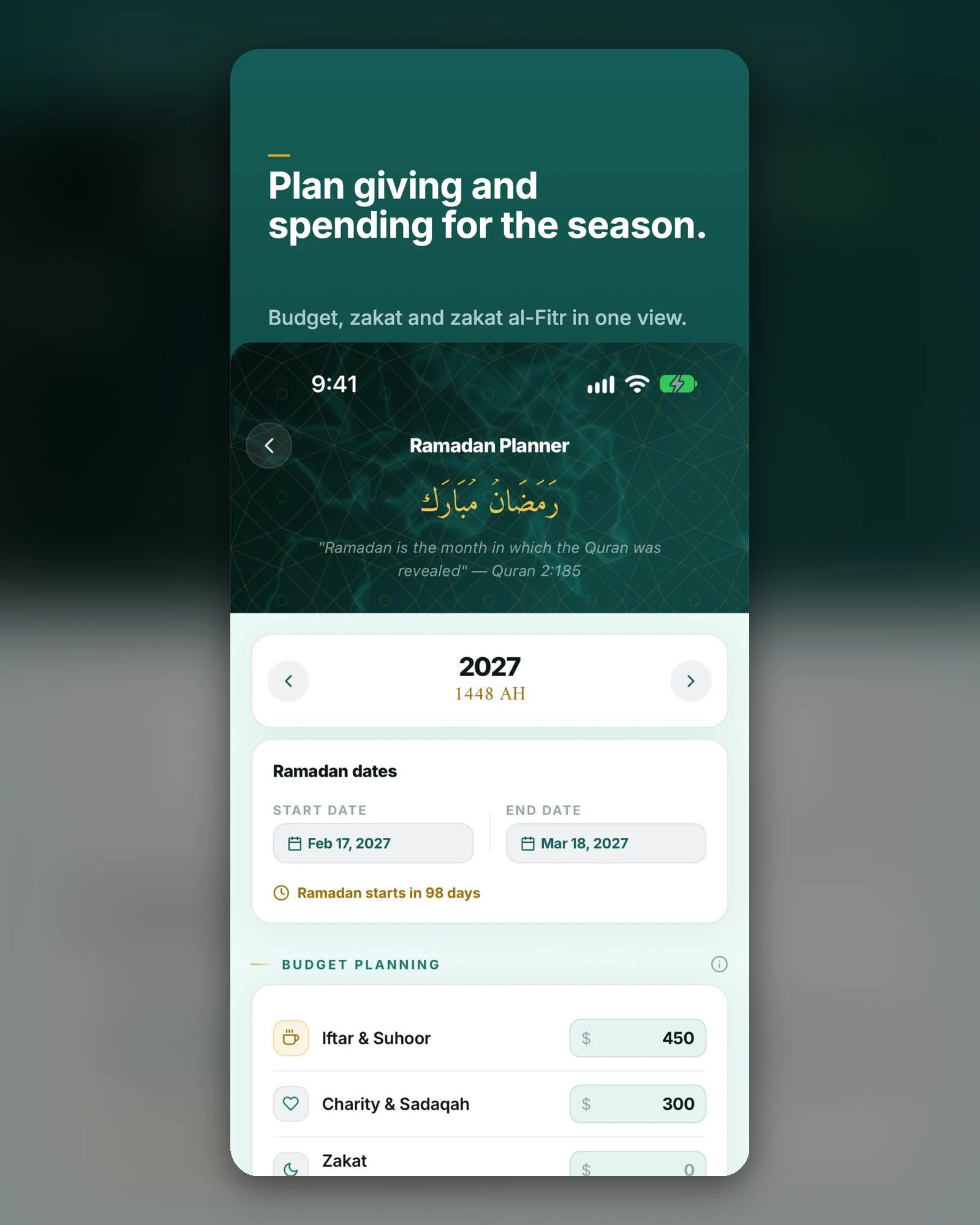
The Ramadan planner puts the budget, zakat and zakat al-Fitr in one view. 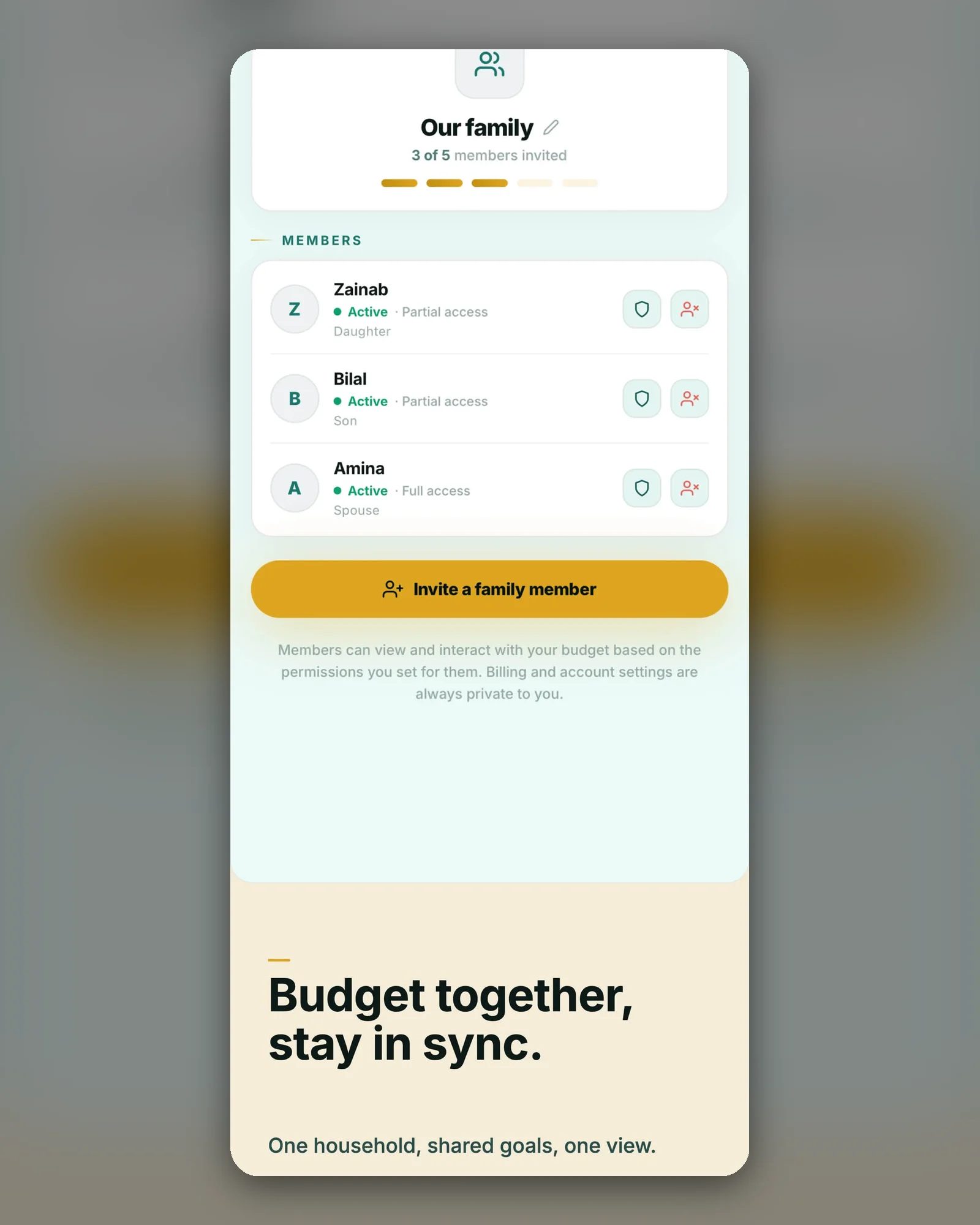
Family members share one household budget. 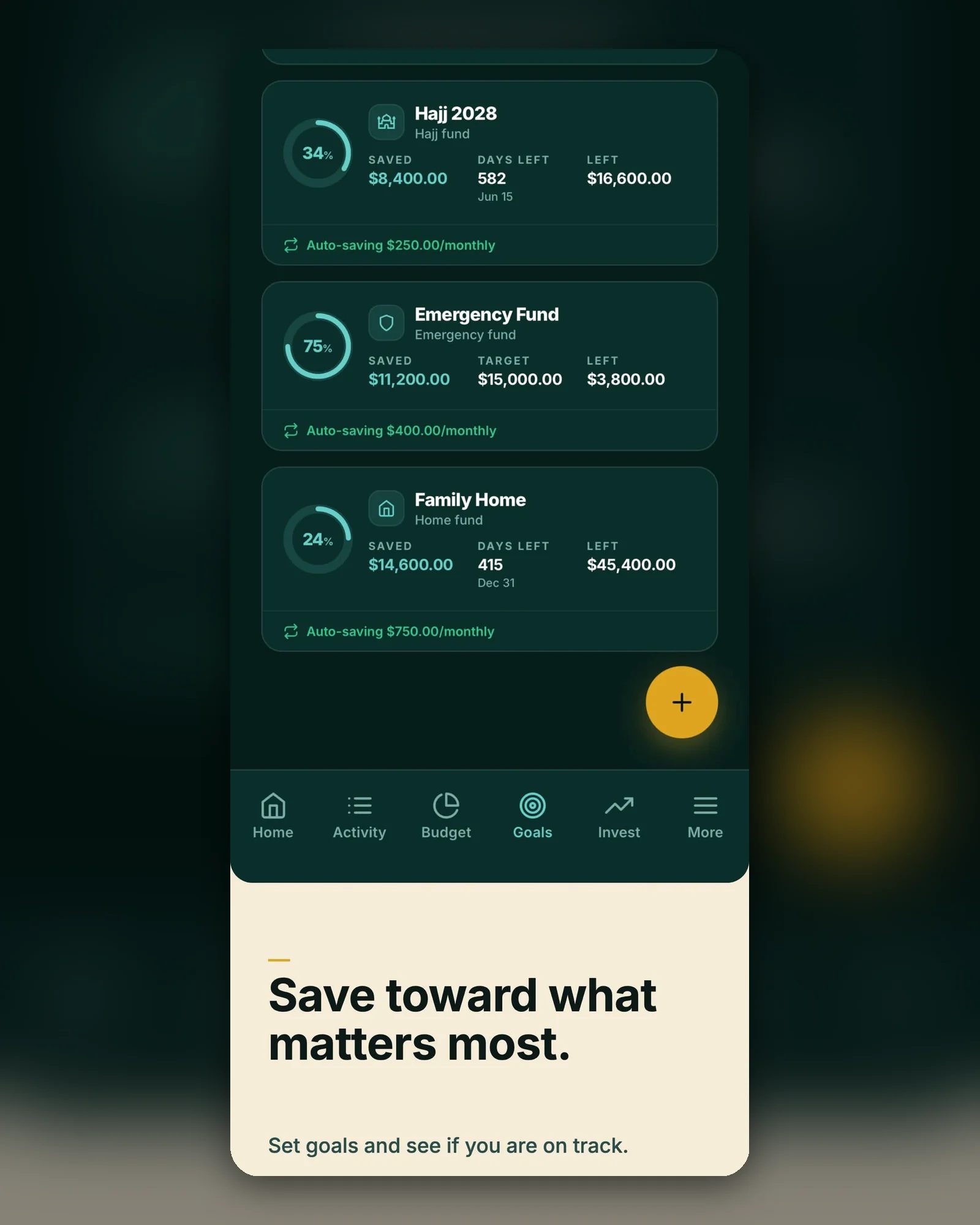
Savings goals for Hajj, an emergency fund or a family home. 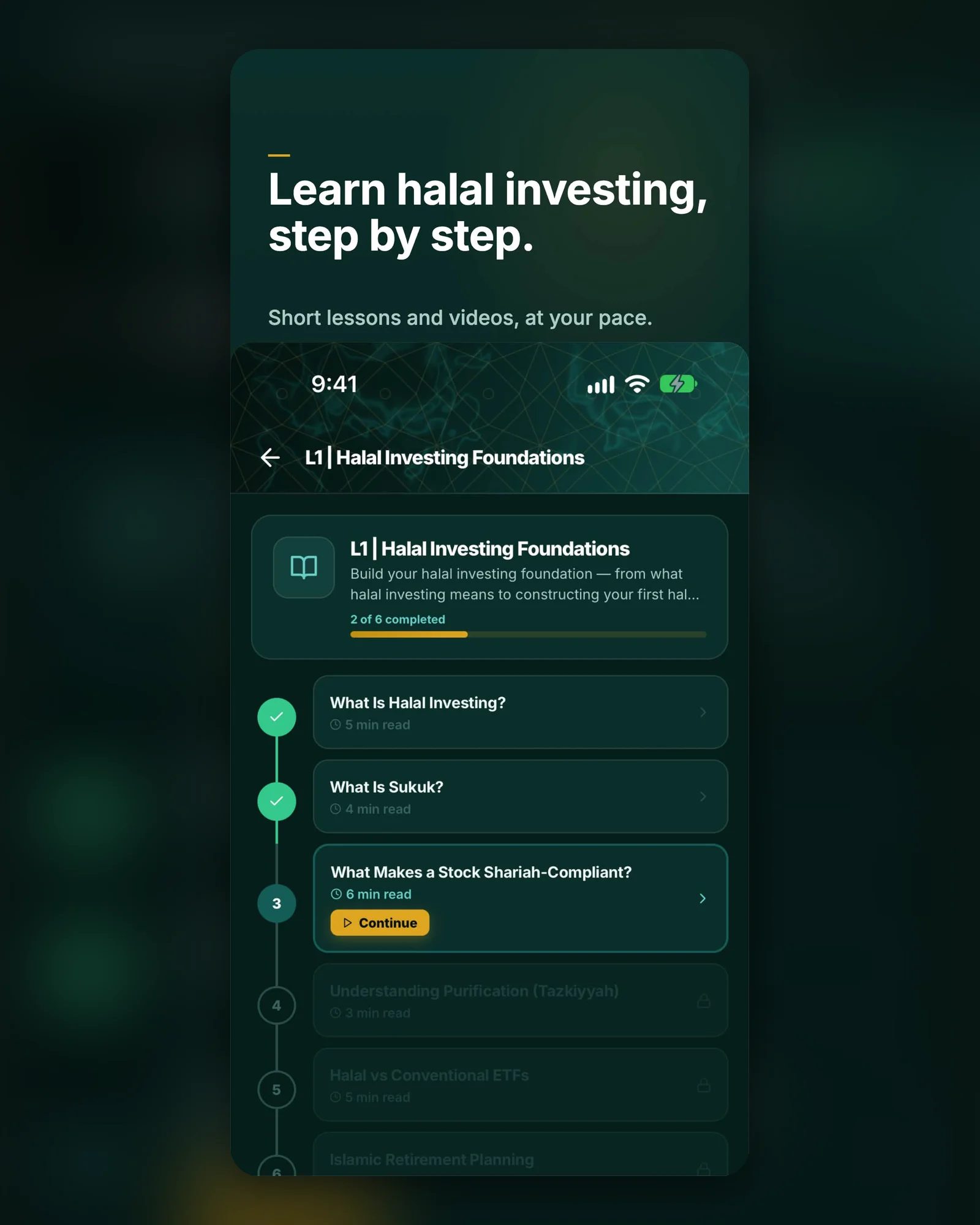
Short lessons on halal investing, step by step. 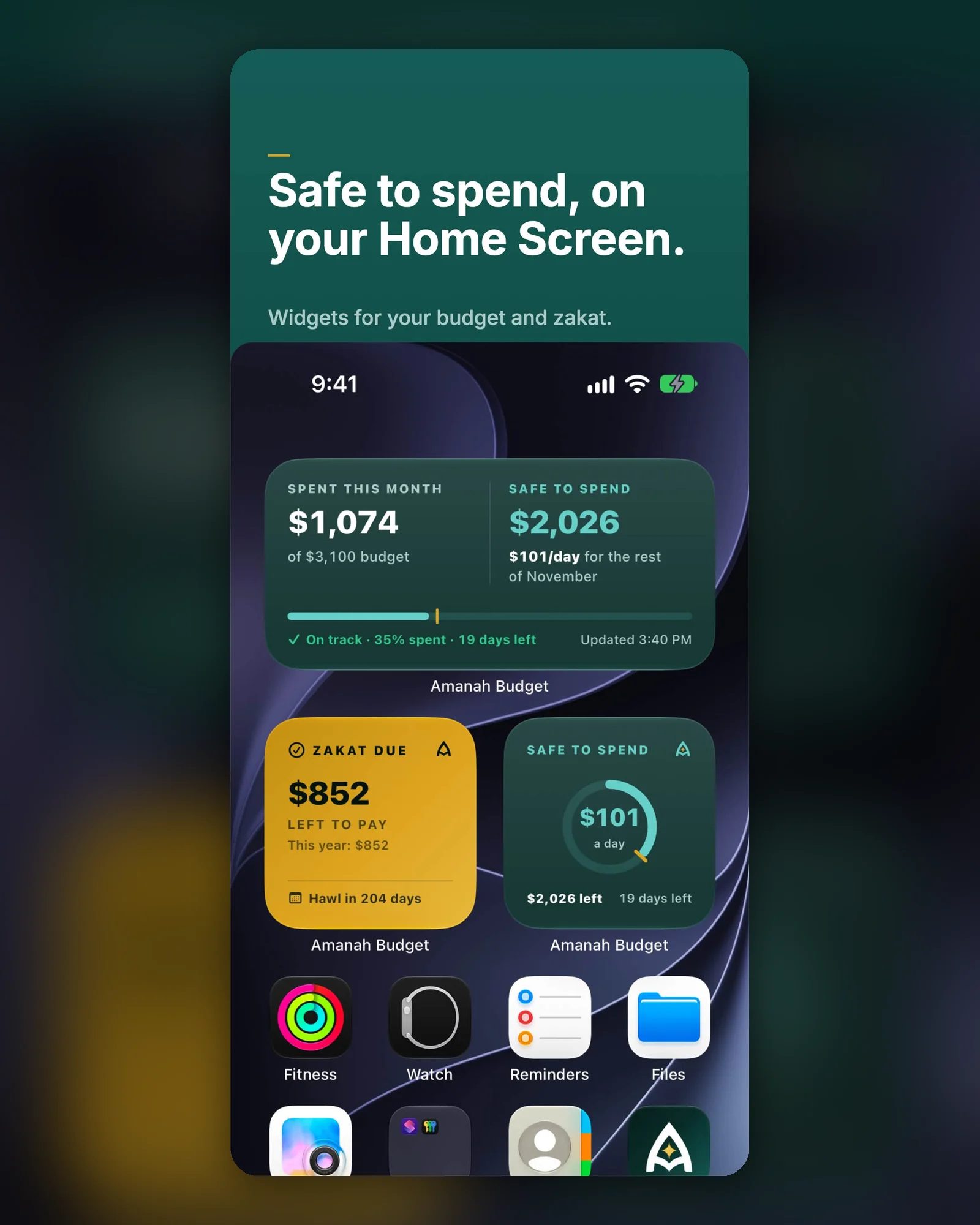
Home Screen widgets show what’s safe to spend and the zakat due.


05 · What changed
Which holdings are compliant
The app, the user said, made it easy to see which of their investments were compliant, and showed exactly what purification rate applied to each holding.
Clarity like that used to take hours of research and a lot of second-guessing, he says.
That is the moment it stopped being my project and became something for the community.
At home, zakat is no longer a once-a-year scramble. Imran and his wife can see where they stand all year. Interest is flagged when it appears, and Ramadan and Eid are planned for ahead of time. He spends far less time double-checking the math, he says, because the guidance behind it comes from scholars.
For other families, the shift he hopes for is from “we did it” to “we did it carefully.” Zakat becomes a running number tracked against the current nisab, not something rebuilt from bank statements. Interest gets separated as soon as it shows up instead of sitting until Ramadan. Money for Ramadan and Eid is set aside ahead of time rather than decided in the final ten days.
How it came together
Before
Two decades of building for others
Software developer, then enterprise solutions architect, while the family’s zakat lived in a spreadsheet.
A couple of years ago
Three spreadsheets and two fatwas
Working out his zakat leaves him unsure his investments are halal. He waits for someone else to build the fix.
Last year
He stops waiting
He starts designing the first version of Amanah Budget for his own household.
Before launch
Families, mentors and scholars
Conversations with Muslim families shape the app. Azka Advisors and Dr. Farrukh Habib guide the zakat rules.
Launch
Live on iPhone and Android
The iPhone app comes first. Android follows just under seven weeks later. Real families start using it.
Now
Taking it to the community
A LaunchGood campaign funds outreach, and Imran talks with families in person.
06 · Faith
Named after a trust
Imran says faith shapes the business at the root, starting with the name.
An amanah is a trust, something you’re responsible for and answerable for, and that’s how I try to treat both the money people manage in the app and the confidence they place in me.
He sees building the app as a form of sadaqah, which is why its core features are available to everyone. He doesn’t make Shariah decisions himself. When he launched the community campaign, he told supporters plainly that it was sadaqah, not zakat and not an investment, because blurring those lines wouldn’t be honest. Zakat, interest and Ramadan planning were the foundation he designed the app around from the start.
07 · What’s next
One place for a family’s money
In five years Imran wants Amanah Budget to be the one place a Muslim family goes to understand its money and act on it in line with its faith. Today that means knowing your zakat, checking your investments and planning for Ramadan and Eid. Later he wants families to be able to invest and move money from inside the app, through partnerships formed at the right time.


He also wants a formal Shariah advisory board with published oversight, so every user can see who stands behind the guidance. He plans to reach families through mosques, community events and word of mouth, and later in other regions beyond the Americas. The core features, he says, stay available to everyone.
It started with one man, three spreadsheets and two bookmarked fatwas, waiting for a bigger company to build the fix.
I spent years assuming a larger company would solve this, and the moment I stopped waiting was the moment it started to exist.
What he’d tell another Muslim founder
Start with a problem you live
Then check it against other people’s lives. His own household was the start; other families showed him how wide the problem was.
Know where your expertise ends
He could build the technology, but he isn’t a scholar, so he brought in qualified Shariah guidance.
Build the faith in from the ground up
It can’t be added to a standard product afterwards, and he says people can tell the difference.
Be transparent
About how things are calculated, and about how you ask for support.
Don’t wait for someone else to build it
He spent years assuming a larger company would. The app began to exist when he stopped waiting.
In his words
What were the first steps you took to get started?
I started by designing it for myself. My wife and I handled the Islamic side of our finances manually, with an Excel sheet I pulled up a few times a year, and it was always out of date. But I didn’t want to build only around my own household, so I talked to other Muslim families about how they handled zakat, sadaqah, interest and Ramadan planning. The patterns were remarkably consistent: rough calculations done in their heads, handwritten notes in a notebook, or a simple spreadsheet many didn’t maintain. About 70% ended up estimating zakat near the end of Ramadan, and roughly two out of three didn’t plan for Ramadan and Eid ahead of time. All but one let interest sit in their accounts until Ramadan, then added it up and gave it to charity. What was easy was the intent, because everyone cared about getting it right. The hard part was having a system they could trust all year. Those conversations became the blueprint for the app.
What has been the biggest challenge for the business so far?
The biggest challenge has been that I’m doing all of it myself. Building the app was the part I knew how to do, but a financial product for a faith community needs more than good code. I’ve been the engineer, designer, compliance lead, support desk and marketer at once, and a financial app leaves no room for cutting corners on any of them. Some of the hardest problems were ones I couldn’t solve with code alone, like banks that require separate registration before they’ll connect, which means a customer can’t link their account even when the app is ready for them. The deepest challenge is trust and reach. Families will only hand a financial app their zakat if they trust it, and with no marketing budget that trust comes slowly, one conversation and one recommendation at a time. That’s why I leaned on scholarly guidance, and why I’m taking the app to the community directly.
Who is your typical customer, and what do they come to you for?
My typical customer is a Muslim family in the US, usually a household where money is managed together, who wants their finances to line up with their faith and has been piecing that together by hand. They come to us for a few things. Most often it’s zakat: knowing their number throughout the year, not scrambling at the end of Ramadan. Many come to check whether their investments are compliant and what purification applies to each holding. Others want interest in their accounts flagged and set aside, or a way to plan Ramadan and Eid ahead of time. Underneath all of it, they want everyday budgeting that connects to their bank and works alongside their faith, with their spouse and family in the same place.
Is there anything we didn’t ask that you want people to know?
I’d like to thank my wife and our three children for their patience while I built this, Dr. Farrukh Habib and Azka Advisors for their Shariah guidance, and the families and early testers who shared their honest feedback. To anyone starting something for the community, don’t wait for someone else to build it. I spent years assuming a larger company would solve this, and the moment I stopped waiting is when it began to exist. You don’t need to be perfect or have every answer. Find the people who do, and keep the community at the center. If you’d like to see what we’ve built, Amanah Budget is at amanahbudget.com.
This story is based on Imran’s answers to our story interview. Photos and app screenshots are from Imran and Amanah Budget. Muslim Entrepreneurs has a paid partnership with Amanah Budget, which includes the reader offer above.


